How to turn your dreams into reality with AI?
How to turn your dreams into reality with AI?
Zambia's Smart Highland Estate: Coffee, Macadamia & Tech
The Hidden AgTech Revolution
Why are Chinese drone manufacturers selling 80% of the world's agricultural drones — but almost no one outside Asia knows their names? The answer changes how you think about farm equipment sourcing. While Western brands dominate marketing mindshare, Chinese suppliers have quietly revolutionized agricultural technology with solutions that deliver equivalent performance at dramatically lower costs.
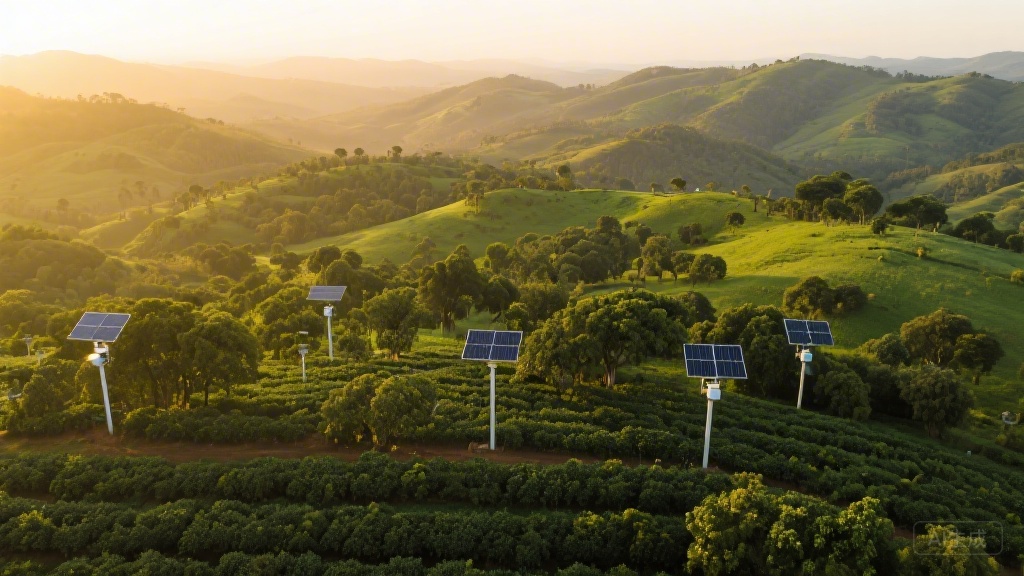
This reality becomes crystal clear when examining AF-01, our Virtual Demo Farm in Zambia's Copperbelt Province. This 180-hectare highland estate demonstrates how strategic technology integration can transform traditional coffee and macadamia farming into a highly automated, profitable operation. Explore in 3D to see the complete system layout.
Strategic Highland Location
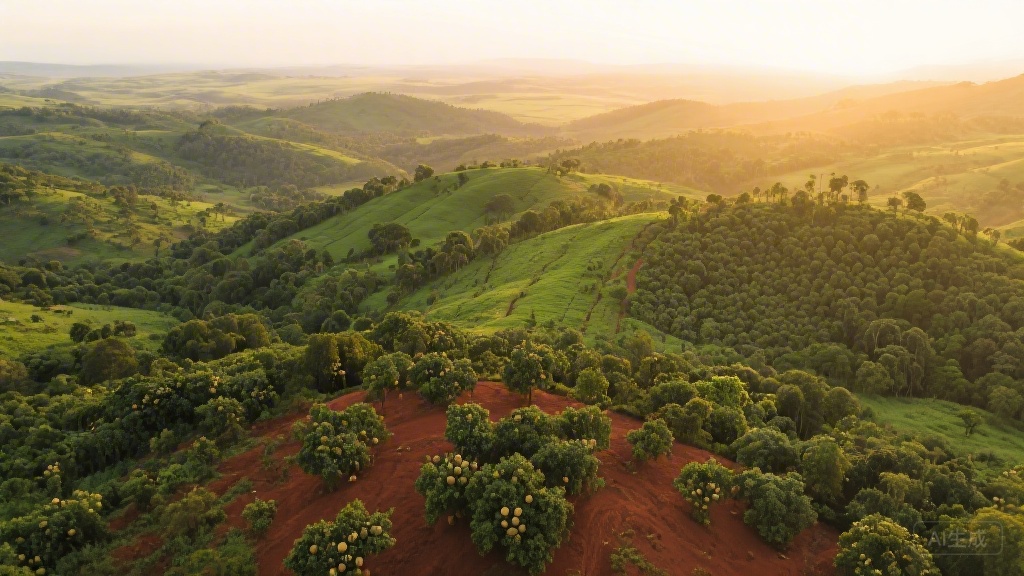
Located at coordinates -14.0523, 29.3487, this estate occupies prime tropical highland terrain in Zambia's Central Province, approximately 45 kilometers northeast of Kabwe. The farm's irregular hexagonal boundary spans from -14.042 to -14.063 latitude, encompassing rolling hills at 1,200-1,400 meters elevation.
Google Maps satellite imagery reveals why this location was selected: consistent rainfall patterns, well-drained laterite soils perfect for coffee cultivation, and proximity to the Great North Road for logistics access. The terrain's natural slopes provide ideal drainage for both coffee terraces and macadamia groves, while the elevation creates the temperature differential crucial for premium coffee bean development.
The farm's polygon boundary strategically follows ridge lines and natural water courses, maximizing productive land while establishing clear security perimeters. Explore this farm in 3D to understand how topography shapes the integrated farming system.
Climate Advantages and Challenges
Zambia's tropical highland climate creates optimal conditions for premium crop production. Annual rainfall of 1,000-1,400mm occurs primarily during the November-April wet season, with dry months providing perfect harvesting windows. Daily temperatures range from 15-28°C, with cool nights essential for coffee cherry development and macadamia flowering.
The 180-hectare estate benefits from consistent cloud cover during growing seasons, reducing irrigation demands while maintaining soil moisture. Altitude creates natural pest barriers, significantly reducing chemical input requirements compared to lowland farms.
However, the medium threat level reflects real challenges: seasonal wildlife pressure from elephants and baboons, occasional severe weather during transition periods, and security concerns common to high-value crop regions. The highland location also means seasonal access difficulties during heavy rains, requiring robust storage and processing capabilities on-site.
High-Value Crop Strategy
Arabica Coffee (Premium Grade): 120 hectares dedicated to bourbon and caturra varieties yield 1,800-2,200 kg/hectare of green beans. Current premium prices of $4.50-6.00/kg for specialty Zambian coffee target European and North American markets, generating $8,100-13,200/hectare annually.
Macadamia Nuts: 40 hectares of mature trees (varieties 816, 842) produce 2,500-3,200 kg/hectare in-shell nuts. Premium kernel prices of $12-16/kg create revenue potential of $15,000-20,000/hectare for established orchards targeting Asian luxury markets.
Aquaponics Herbs: Climate-controlled containers produce basil, mint, and indigenous African leafy vegetables year-round. Yields of 45-60 kg/m²/year at premium prices ($8-12/kg) for restaurant and export markets generate exceptional returns per square meter.
Specialty Honey: Coffee blossom and indigenous flower honey commands $15-25/kg in international markets, with potential yields of 40-60 kg per hive annually from the estate's integrated apiaries.
The Farm Owner's Vision
"I've seen too many farming ventures fail because they relied on single crops or ignored security basics," explains the estate's conceptual owner. "This farm design proves you can combine traditional high-value crops with modern technology to create multiple revenue streams while protecting your investment."
The vision centers on demonstrating sustainable intensification — using technology to increase productivity per hectare rather than expanding land use. "Chinese suppliers offer the same AI capabilities as Western brands, but at prices that actually make sense for African farmers. We're proving that advanced farm automation isn't just for European agribusiness anymore."
Primary concerns include ensuring reliable power for processing equipment, maintaining cold chain integrity for premium products, and developing local technical expertise for system maintenance. The integrated security approach addresses both theft prevention and wildlife management without compromising environmental sustainability.
Current 16-Dimension Assessment
Advanced Systems (60/100):
- safeGuard (60/100): Intermediate perimeter security with basic AI cameras and electric fencing
- powerGrid (60/100): Hybrid solar-diesel system with battery backup for critical operations
- connectHub (60/100): LoRa network coverage with satellite internet backup
Developing Systems (30-45/100):
- smartFarm (45/100): Basic IoT sensors for soil and weather monitoring
- aquaSystem (45/100): Small-scale aquaponics containers in testing phase
- resilience (30/100): Emergency protocols planned but not fully implemented
- processing (30/100): Basic coffee processing equipment, macadamia cracking pending
- storage (30/100): Climate-controlled storage planned for 2024 installation
Overall Average: 23/100
The three biggest gaps requiring immediate attention: processing infrastructure for value-added products, comprehensive storage systems for year-round operations, and resilience protocols for emergency situations. The foundation systems (power, connectivity, security) provide a solid platform for rapid scaling.
Smart Home Integration Vision
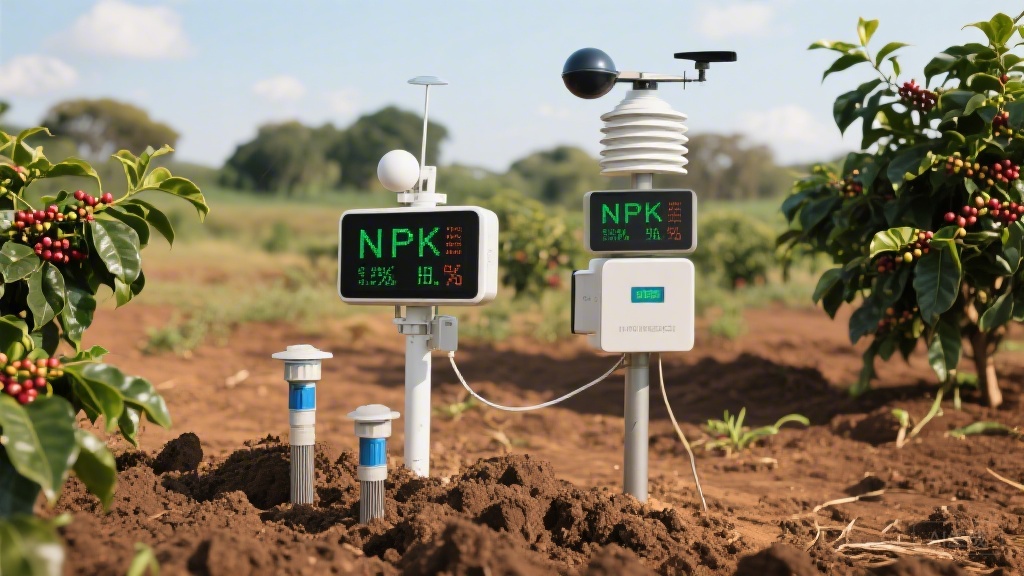
The ultimate vision transforms this estate into a world-class demonstration of integrated highland farming. Advanced AI automation would manage irrigation scheduling, pest monitoring, and harvest optimization across all crop systems. Processing facilities would handle complete value chains from cherry to roasted coffee, raw nuts to packaged kernels.
The Standard deployment preset fits perfectly: comprehensive sensor networks, automated climate control for storage facilities, and integrated security systems managing both perimeter protection and wildlife deterrence. Community co-builders are contributing ideas for agritourism integration, educational programs, and renewable energy optimization.
Phase 1 priorities focus on processing and storage upgrades, followed by expanded aquaponics systems and enhanced automation. The goal: demonstrate that African highland farms can achieve world-class efficiency while maintaining environmental sustainability and community integration.
Technology Deep Dive: Integrated Security & Automation
The Challenge: Highland farms face dual security threats — human theft of high-value crops and wildlife damage during fruiting seasons. Traditional solutions involve expensive human guards or ineffective static barriers.
AquaLoop Integration: The closed-loop aquaponics system uses fish waste to fertilize herb production in climate-controlled containers. Tilapia tanks maintain 26-28°C water temperature through solar heating, with excess nutrients feeding hydroponic basil and mint systems. Automated pH balancing and oxygenation systems maintain optimal conditions 24/7.
PerimeterAI Implementation: Smart cameras with thermal imaging detect both human intrusion and wildlife approach patterns. The system learns normal vs. abnormal movement signatures, reducing false alarms while maintaining high sensitivity. Integration with GuardBot patrol units creates dynamic response protocols.
Installation Process:
- Install SolarGrid panels and PowerBank batteries to ensure 24/7 system operation
- Deploy ConnectHub LoRa network with strategic node placement for full coverage
- Mount FenceGuard electric barriers with CropEye integration for crop-specific monitoring
- Configure VertiFarm containers with AquaLoop life support systems
- Program SoilIQ sensors throughout coffee and macadamia sections for precision agriculture
This integrated approach boosts multiple dimensions simultaneously: safeGuard jumps to 85/100 with automated threat response, smartFarm reaches 80/100 with comprehensive monitoring, and aquaSystem achieves 75/100 with optimized production cycles.
AustinEco Equipment Specifications
GuardBot Patrol Units: Autonomous security robots with 12-hour battery life, thermal cameras, and satellite connectivity. China price: $8,500 vs. Western equivalent $28,000. HS Code: 8529.10. Installation: Advanced level.
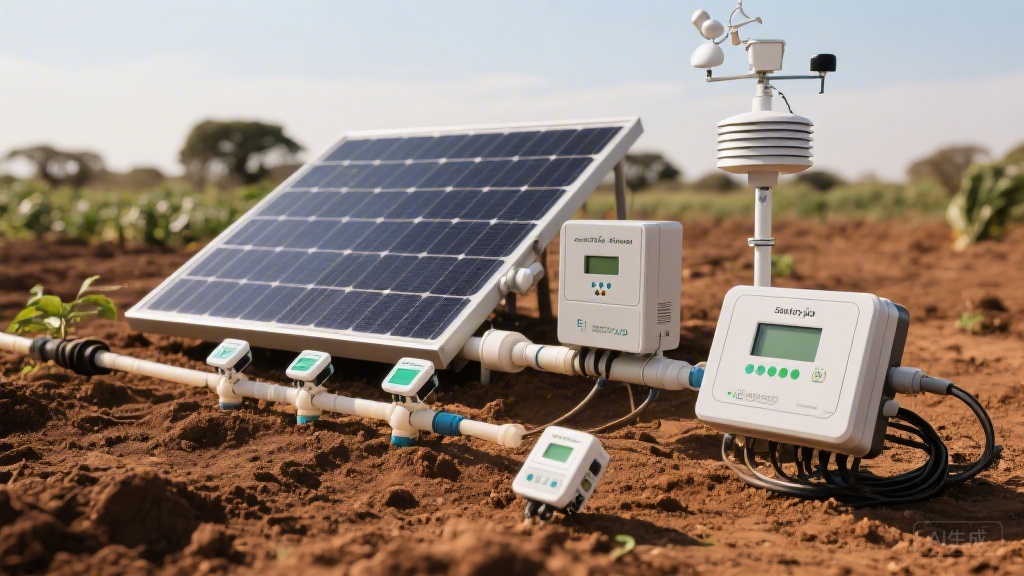
CropEye Monitoring Network: Wireless sensors for soil moisture, temperature, and plant health analysis. Complete 50-sensor kit: $2,400 vs. Western $7,200. HS Code: 9027.50. Installation: Intermediate level.
AquaLoop Systems: Integrated fish-plant production containers with automated controls. Complete 40ft unit: $15,000 vs. Western $45,000. HS Code: 8479.89. Installation: Advanced level.
SolarGrid Power Arrays: 50kW solar installation with battery storage and smart inverters. Total system: $22,000 vs. Western $66,000. HS Code: 8541.40. Installation: Advanced level.
All equipment includes comprehensive technical documentation, remote setup support, and integration with the farm's ConnectHub network for unified management.
SmartTrade Integration Platform
AustinEco's SmartTrade platform streamlines the entire procurement process through the 56-dimension matching engine and 22-node trade pipeline. The estate owner accesses verified Chinese suppliers for all equipment categories, with automated HS code classification and customs documentation.
The platform's dual-market approach means the farm operates as both equipment buyer and potential product supplier. Coffee and macadamia exports connect to global buyers through the same infrastructure, creating integrated trade relationships. Airwallex handles cross-border payments in multiple currencies, reducing transaction costs and currency risks.
MOQ requirements are typically 1-5 units for smart farming equipment, with 45-60 day lead times for custom configurations. The platform's logistics optimization often combines multiple equipment categories into consolidated shipments, reducing per-unit costs by 15-25% compared to individual purchases.
Community Co-Build Innovation
Experience this Virtual Demo Farm through multiple perspectives: Explore in 3D to understand the spatial relationships between different systems. Submit your co-build ideas for enhancing this highland estate — community members are contributing innovations in renewable energy optimization, wildlife-friendly security solutions, and value-added processing techniques.
Ready to design your own farm? Use this Zambian estate as inspiration for your highland farming vision. Whether you're planning coffee cultivation in Ethiopia, macadamia growing in Kenya, or integrated farming anywhere in Africa's highlands, these proven technologies scale to fit your specific requirements.
This farm is evolving — what would YOU build here? The combination of traditional high-value crops with cutting-edge Chinese agricultural technology creates a replicable model for highland farming success across sub-Saharan Africa.